




 In stock






Copyright © 2026 KVMGalore® - All rights reserved.
Buy this item and earn 0 ClubPoints.
QUICK-VID: Quicklime video AI module
with customized prompts for video events - pricing is based on camera count

Quicklime is best-in-class data-center infrastructure management software (DCIM).
Quicklime is a powerful and versatile centralized monitoring and management platform for complex infrastructures. Designed for mission-critical environments, it provides comprehensive modules with AI powered analytics for data-center infrastructure management (DCIM), video surveillance and sensorCFD.
Monitor all your deployed sensors, intelligent PDUs, backup power systems from a single user interface. 3D data center visualization, rack mapping, capacity planning, asset tracking and more.
With Quicklime you can create customized desktops that drill down from a data center view to an individual rack, or asset in a few clicks. Sensor data feeds into assets for granular insights into each assets power, environmental, security or network status. Integration with third party sensors via popular protocols such as Modus, Bacnet, SNMP and MQTT.
Video Analytics
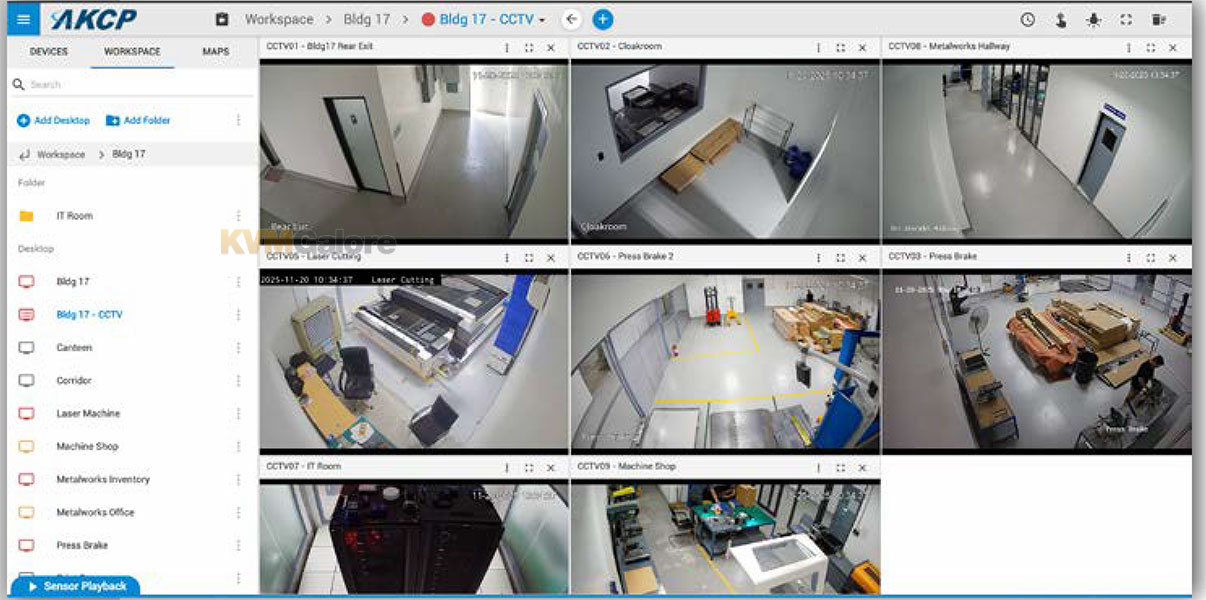
Quicklime video AI module is a groundbreaking video AI feature for Quicklime DCIM Digital Twin software. Video feeds in Quicklime can be handled like any other sensor with notifications based on sensor events.
Video AI utilizes Large Language Model (LLM) technology to transform data center camera feeds into customizable, intelligent "virtual sensors."
Utilize AI prompting to create video analytical sensors that watch for specific events such as employees not wearing protective gear, crossing into unauthorized areas or checking
for hazards.
Use AI prompting to review recorded video for specific events and synchronize events with sensor data.
Beyond Basic Image Recognition
Traditional video surveillance relies on simple motion detection or basic image recognition, which often generates a high volume of false positives and requires constant human monitoring to interpret events. AKCP's video AI transcends these limitations by integrating a full LLM capable of understanding contextual actions in real-time.
Instead of merely detecting the presence of a person, Quicklime's cideo AI analyzes the video stream to understand what is happening, applying natural language rules prompted by the user.
Deploying Natural Language Virtual Sensors
With video AI, Quicklime users can create highly specific virtual sensors simply by typing plain-text prompts. The LLM monitors the designated camera feeds against these customized parameters, triggering alerts only when the defined conditions are met.
Operators can deploy complex security and compliance rules in seconds, such as:
• "Watch camera feed 1 and alert for people touching cables."
• "Watch camera feed 2 and alert if people enter the premises not wearing their ID badge."
• "Monitor the containment aisle and alert if a rack door is left open for more than two minutes."
Elevating Security, Compliance, and Operational Oversight
By leveraging LLM-driven video analytics you can automate physical security and operational compliance with ease. The deployment of video AI virtual sensors provides critical advantages:
• Customized Monitoring: Tailor security and operational alerts to the exact needs and policies of your facility, without requiring complex coding or specialized AI training.
• Proactive Threat Detection: Identify risky behaviors, such as unauthorized interaction with critical infrastructure, before they result in downtime or physical damage.
• Automated Compliance: Ensure adherence to access control policies, such as mandatory ID badge visibility.
• Reduced Alert Fatigue: Filter out benign movements and only alert on specific, prompt-defined actions.
Software Updates and Support
Software updates and support are included with the license for one year. Optional Quicklime annual maintenance (to continue receiving software updates and support after the first year lapses) is also available.
Need help with product selection?
Call KVMGalore at 1-800-636-3434, or submit your question on KVMGalore HelpCenter.